Starlight Script: A Modern Handwritten Font for Real Projects
There’s a certain warmth that comes with handwritten typography. It feels personal, immediate, and human. Yet, for many professional applications, traditional script fonts can be tricky—they often sacrifice legibility for style, or feel too casual for polished work. Starlight Script occupies a thoughtful middle ground. It’s a modern handwritten script designed with both aesthetics and function in mind. The letterforms flow with a natural, contemporary rhythm, but they maintain a clarity that’s essential for effective communication. This isn’t a font that tries to mimic vintage penmanship; it’s built for today’s visual language.
Understanding the Font's Personality and Visual Appeal
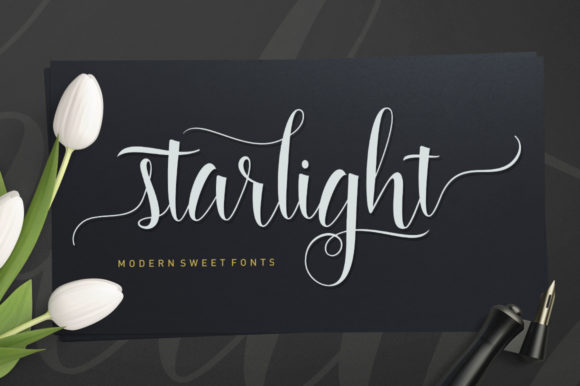
At its core, Starlight Script presents a balanced personality. It’s approachable without being childish, elegant without being stuffy. The strokes have a consistent, moderate weight that avoids the extremes of ultra-thin or overly bold scripts. You’ll notice subtle variations in line thickness that mimic the natural pressure of a pen, giving it an authentic, crafted feel. The connections between letters are smooth and logical, ensuring that words hold together visually rather than appearing as a disjointed collection of characters. This cohesion is what sets it apart as a premium font—every detail is considered for real-world use.
The overall style leans modern and clean, making it versatile. It doesn’t scream for attention with excessive flourishes or ornate swashes, though it may include stylistic alternates for those who want to add a subtle flourish. Its strength lies in its readability at various sizes, a critical factor for any display font intended for more than just a headline. Whether you’re setting a short phrase on a logo or a line of text on a social media graphic, the words remain distinct and easy to read.
Where This Typeface Truly Shines: Practical Applications
Choosing the right font is about matching its strengths to your project’s needs. Starlight Script excels in scenarios where you want to inject personality and warmth without compromising on professionalism. Think of it as a tool for building connection.
For branding designs, it’s a compelling choice. A logo that incorporates Starlight Script can feel instantly relatable and artisanal, perfect for boutique businesses, cafes, independent creators, or lifestyle brands. It helps build a brand identity that feels human-centered. Beyond the logo, it works beautifully for brand collateral—think thank you cards, packaging tags, and promotional flyers where a personal touch is valuable.
In the realm of marketing and social media graphics, its readability at digital sizes makes it a workhorse. Use it for Instagram quote graphics, Facebook ad headlines, or Pinterest pins where you need to capture emotion quickly. It pairs surprisingly well with a clean sans serif font for body text, creating a dynamic and modern font pairing that guides the viewer’s eye.
For publishing and editorial design, it’s ideal for specific accents. Consider it for chapter titles in a book, pull quotes in a magazine, or section headers in a blog post. It adds a layer of visual interest that a standard serif font might not provide. Similarly, in packaging design, it can convey the care and quality behind a product, especially for artisanal goods, cosmetics, or specialty foods.
Don’t overlook personal projects. It’s a fantastic creative font for wedding invitations, greeting cards, personal stationery, or craft projects. Its commercial license often extends to these uses, making it a valuable design asset for hobbyists and crafters who sell their creations.
Making It Work: Guidance for Designers and Creators
Having a great font is one thing; using it effectively is another. Here’s some practical guidance for integrating Starlight Script into your workflow.
Evaluate the Fit: Before you commit, test it with your actual content. Type out your business name, a key headline, or a tagline. Does the personality of the font match the message you want to send? A modern handwritten script like this communicates creativity, approachability, and authenticity. Ensure that aligns with your project’s goals.
Test Font Pairings Relentlessly: This is where good design happens. Starlight Script, as a script font, will almost always need a companion. Try pairing it with a geometric sans serif for a clean, contemporary look, or with a traditional serif for a more classic, refined contrast. The key is to choose a companion that is highly legible for longer text and creates a clear visual hierarchy—Starlight for emphasis, its partner for information.
Review the Included Styles: Check what comes with the font package. Does it include multiple weights, like Regular and Bold? Are there stylistic alternates or ligatures? Understanding these extras allows you to customize the look further and solve specific design problems, like improving the flow between certain letter combinations.
Prioritize Readability Considerations: Always test at the intended size and medium. A font that looks gorgeous on your 27-inch monitor might become a blur on a mobile phone screen or when printed small. Ensure sufficient contrast with the background color. For body text, even short paragraphs, it’s generally best to reserve Starlight Script for headlines or accents and use a highly legible font for the main text.
Understand Commercial Licensing: If you’re using it for client work or commercial products, confirm the license. Most premium fonts from reputable foundries allow for broad commercial use once purchased, but it’s always prudent to double-check the terms for things like logo trademarking or large-scale distribution.
Ultimately, Starlight Script is more than just a pretty typeface. It’s a versatile modern typography tool. When used thoughtfully, it can elevate a design, strengthen a brand’s voice, and create a memorable visual experience. It bridges the gap between the organic feel of a handwritten font and the reliability required for professional communication, making it a worthy addition to any designer’s or creator’s toolkit.